
This page is for you if you've picked a first hike and keep hearing "carry the ten essentials" without anyone saying what to buy. And this list doesn't change later. You carry the same ten all the way up to big mountain climbs.
Keep in mind that prices change, and sales change them a lot. Check the linked page before you buy.
What is the five minute shopping list?
So here is the best-value pick for each essential. The sections below give a cheaper pick and a no-limit pick too, plus what you probably own already.
| Essential | Best value pick | Price | Why |
|---|---|---|---|
| 1. Navigation | Suunto M-3 G compass | $72 | The M-3 G lets you set declination (the gap between compass north and map north), which is worth the extra money over the cheaper Suunto A-10 NH. Add a free printed map and a downloaded phone map. |
| 2. Headlamp | Black Diamond Spot 400 | $59.95 | The Spot 400 takes cheap AAA batteries and is fully waterproof. Treeline Review named it the best battery-powered headlamp. |
| 3. Sun protection | CAMP Eyewear Trail sunglasses and Coppertone WaterBabies SPF 50 lotion | $79 and $8.88 | OutdoorGearLab named the CAMP Trail its best value upgrade for daily wear. Consumer Reports gave the WaterBabies lotion a perfect score in its 2026 sunscreen tests. |
| 4. First aid | Adventure Medical Kits Mountain Series Hiker | $34.49 | OutdoorGearLab tested the Hiker kit on day hikes and named it Best Value for the Outdoors. The Hiker kit includes pain relievers and an antihistamine. |
| 5. Knife and repair kit | Leatherman Wingman multi-tool | $49.95 | The Wingman has pliers, scissors and a locking knife. OutdoorGearLab named it Best Bang for the Buck. |
| 6. Fire | UCO Stormproof Match Kit with 25 matches | $11.99 | The matches are waterproof and windproof. Pair them with a cheap lighter so you have two ways to make a flame. |
| 7. Emergency shelter | SOL Emergency Bivvy with Rescue Whistle | $24.49 | You crawl inside the bivy, so it blocks wind and rain better than a flat emergency blanket. It weighs about 4 oz (113 g). |
| 8. Extra food | Clif Bar Chocolate Chip, 12-pack | $17.50 | Bars need no cooking, which is what the National Park Service recommends. Buy the kind you will actually eat. |
| 9. Extra water | Sawyer Squeeze filter and Nalgene 32 oz Wide Mouth bottle | $45.95 and $16.99 | The Squeeze was the most common filter among 790 Pacific Crest Trail hikers in 2025. Sawyer's own store has it out of stock, so the link goes to REI, which has it. |
| 10. Extra clothes | REI Co-op Magma 850 Down Hoodie and Patagonia Torrentshell 3L rain jacket | $259 and $189 | OutdoorGearLab named the Magma its best value upgrade and the Torrentshell its best rain jacket. Add a warm hat and gloves from section 10. |
Keep in mind the jackets in row 10 are most of the cost of this list. If you already own a warm layer that isn't cotton, a rain jacket, a knit hat and gloves, use those for now and spend the money on the other nine.
Do you really need all ten on a short hike?
Yes, you carry all ten, but each one can be small and light on a short hike. The National Park Service calls the ten essentials the minimum, and says to bring more depending on when, where and how long you hike (NPS Hike Smart). So treat the ten as a starting point, not a full packing list.
Something to note is that the lists differ a little. The National Park Service swaps "knife" for "repair kit and tools." It also uses the words "nutrition" and "hydration" for food and water. I use the classic ten, with the repair kit folded in with the knife.
The Mountaineers, a Seattle climbing club, put the list in print in 1974. That was in their book Mountaineering: The Freedom of the Hills, and the park service credits them.
1. What do you need for navigation?
Basically, a map and compass still work when your phone dies or has no signal. The National Park Service says to learn how to use a topographic map (a map that shows hills and valleys), a compass or a GPS unit before you go. It also says to carry a printed map as a backup, download a map onto your phone and pack an extra phone battery (NPS Ten Essentials).
What you probably already own: a smartphone. Use it for a map app, and keep in mind that a phone alone is not a full navigation setup. Put the phone in airplane mode on the trail so the battery lasts longer.
Which paper map should you carry?
- On a budget: A free USGS US Topo map, printed. The US Geological Survey lets you download it as a GeoPDF (a map file) from topoView or the US Topo page.
- Best value: A waterproof printed map of the exact area you hike. The right title depends on the area, so pick the one that covers your trail.
- If money's no object: The same waterproof map. A more expensive map does not give you more safety.
Which phone app should you use?
- On a budget: The free NPS app with a map downloaded before you go (the park service names it on its Ten Essentials page). Or AllTrails Plus at $35.99 a year. AllTrails is strongest for finding trails and reading other hikers' reviews.
- Best value: Gaia GPS Premium, $41.93 for the first year on a yearly plan, then $4.99 a month. The free Gaia app records and tracks your hike, and offline maps need Premium. Keep in mind users complained about price increases in 2024. Andrew Skurka, a long-distance hiker, rates Gaia the stronger choice for serious backcountry navigation.
- If money's no object: I would stay with Gaia GPS Premium and spend the extra money on the compass and battery bank below. CalTopo is another option. The CalTopo app is free to download, but offline maps need a paid subscription.
Which compass should you buy?
A compass is only useful if you can use it with a map. Declination is the gap between where the needle points and true north, and it changes by place. A compass with adjustable declination saves you some math.
| Pick | Price | Weight and key facts | Why I'd pick it |
|---|---|---|---|
| On a budget: Suunto A-10 NH | $28 | About 0.07 lb. Fixed declination scale, jewel-bearing needle. | Outdoor Life named the A-10 its best simple compass, though its tester said it seemed a little less accurate. The A-10 can't adjust declination, so you do a little mental math on a topo map. Suunto's own store is sold out, so the link goes to REI. |
| Best value: Suunto M-3 G | $72 | Global needle (works in both hemispheres), adjustable declination, baseplate with magnifier, clinometer (measures slope), glow-in-the-dark markings. | Adjustable declination is what makes the M-3 G worth the extra money over the A-10. You set it once for your area and then read the map and compass together with no math. |
| If money's no object: Suunto MC-2 G mirror compass | $92 | About 0.25 lb. Sighting mirror for aiming and signaling, clinometer, adjustable declination, global needle. | Outdoor Life named the MC-2 G its Best Overall compass but said it can overwhelm beginners. The mirror and clinometer only help if you will use them. |
What to look for: adjustable declination, a rotating bezel (the turning ring) marked 0 to 360, and a clear baseplate with a ruler. A global needle only matters if you travel between hemispheres.
Which phone battery bank should you buy?
A battery bank (a small portable charger) keeps your map alive. In the 2025 Halfway Anywhere survey of 790 Pacific Crest Trail thru-hikers (people who walk the whole trail in one season), 94.1% carried one. Their banks averaged 14,464 mAh (a measure of battery size). The survey didn't ask which models.
Batteries also lose power in the cold, so CleverHiker tested these banks in a fridge to see how much.
| Pick | Price | Weight and key facts | Why I'd pick it |
|---|---|---|---|
| On a budget: OKZU 10000 | $24.99 | 6.6 oz measured by CleverHiker, 10,000 mAh. | CleverHiker named the OKZU its Best Budget bank. It charges one device at a time and scratches easily, but it recharges quickly. It lost about 6.9% of its output in the cold. The CleverHiker test has the details. |
| Best value: Miady AS-TPB21 2-pack | $21.99 for two | About 8 oz each, 10,000 mAh. | CleverHiker named the Miady its Best Value bank. The Miady has a basic build and recharges slowly, but its output went up in the fridge. That was the best cold result of any 10,000 mAh bank tested. |
| If money's no object: Nitecore NB10000 Gen4 | $83.95 | About 5 oz, 10,000 mAh, two USB-C ports, IPX7 water rating. | CleverHiker named the Nitecore its Best Overall bank, and it gives the most power for its weight. It is expensive and has no USB-A port. It also lost about 13% in the cold, the most of any bank tested. |
What to look for: Choose the Miady if your trips will be cold. CleverHiker also tested the NESTOUT 15000 at $64.99, which lost only about 1% in the cold but weighs 12.9 oz.
2. What headlamp should you carry?
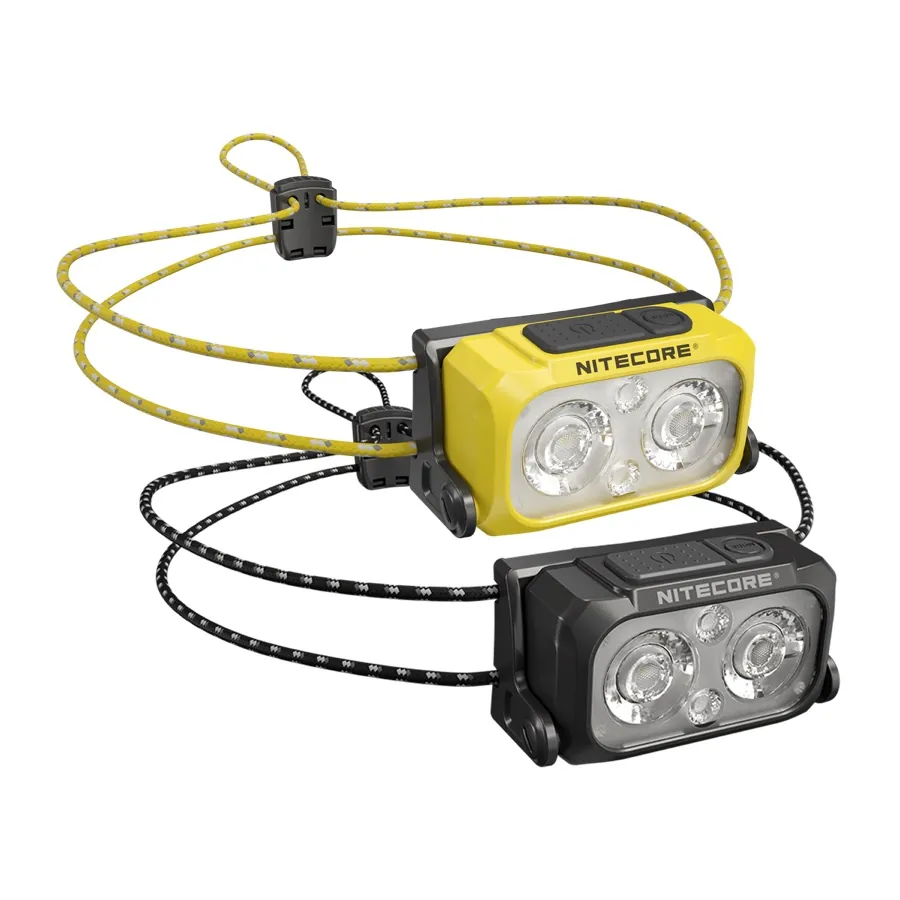
The Nitecore NU25, the headlamp thru-hikers carried most in the 2025 PCT survey. Photo: Nitecore.
A headlamp lights your way and keeps both hands free, which is why it beats a handheld flashlight. Pack extra batteries too (NPS Ten Essentials).
What you probably already own: a phone with a flashlight, and that is not enough. Petzl, a headlamp maker, puts most phone flashlights at only 30 to 60 lumens (a measure of brightness), while its entry-level headlamps start at 300 (Petzl). Avalanche.org says not to rely on a phone light because phone batteries are likely to die after a long day in the cold (Avalanche.org). And you want to save the phone's battery for calls and navigation in an emergency.
You don't need a separate flashlight. Even guide companies like Alpine Ascents ask climbers for a headlamp with fresh batteries plus spares, and no flashlight.
For a sense of what people carry, 96.6% of the 790 thru-hikers in the 2025 Halfway Anywhere survey carried a headlamp. The most common one, at 37.7%, was the Nitecore NU25 at $36.95. Treeline Review found the NU25's many modes confusing, and one forum poster said to skip it unless you want the red light. So I'd pick the NU20 below instead.
| Pick | Price | Weight and key facts | Why I'd pick it |
|---|---|---|---|
| On a budget: Nitecore NU20 Classic | $24.95 | 1.34 oz, 360 lumens, USB-C charging in a little over an hour, up to 97 hours on the lowest setting, IP66 weather rating, red light, lockout. | The 790 hikers rated the NU20 9.35 out of 10, the highest of any headlamp still sold, and it was the second most common. Treeline Review found only about 2 hours on high and an uncomfortable headband. The battery can't be replaced, and one owner lost about half the run time in a year. Still, Treeline named it the best ultralight headlamp. |
| Best value: Black Diamond Spot 400 | $59.95 | 400 lumens, 86 g with 3 AAA batteries or 72 g with its optional rechargeable pack. IPX8 (works underwater for 30 minutes at 1.1 m), 100 m beam, battery meter, lockout. | Treeline Review named it the best battery-powered headlamp. Switchback Travel put it a close second. The 790 hikers rated it 8.31 out of 10. The Spot 400 is heavier and lasts about 2.5 hours on high, but AAA spares are cheap anywhere. |
| If money's no object: Petzl Actik Core | $87.95 | 625 lumens, 88 g, Petzl's CORE rechargeable pack (1,250 mAh) or 3 AAA batteries, red light, strobe, IPX4 (splash only), USB-C. | Switchback Travel named it Best Overall, though it is front-heavy and the battery cover is hard to open. Treeline Review named it best for camping. The 790 hikers rated it 8.85. Spending more buys brightness, not safety. |
A cheaper headlamp with swappable batteries is the Petzl Tikkina at $19.95. It has 300 lumens, 92 g, 3 AAA batteries, IPX4 and white light only. Treeline Review named it Best Affordable but found it has a floodlight beam only and the shortest throw.
What to look for:
- Lumens: 300 or more for walking at night. Alpine Ascents asks guided climbers for 200 to 300. More lumens drain the battery faster.
- Run time: Check burn time on the setting you will really use, not the dimmest one.
- Battery type: AAA models let you swap in spares. Built-in rechargeables need a power bank. Rechargeable batteries slowly lose charge sitting in a drawer, so top them up before a trip. Petzl advises recharging its CORE pack at least every six months.
- Cold: Lithium-ion batteries lose capacity and give less light in the cold, then recover when they warm up (Petzl FAQ).
- Lockout and red light: A lockout stops the headlamp turning on inside your pack. Red light keeps your night vision.
- Water rating: IPX4 means splash-proof only, and IPX8 or IP67 means the headlamp can go underwater.
3. What sun protection do you need?
Sun protection means sunglasses, sunscreen and a hat, and guide companies add lip balm. Sun damages skin and eyes, and UV gets stronger the higher you go (Better Health Victoria). The Food and Drug Administration says up to 80% of UV rays (the sun's burning light) pass through clouds. The CDC says UV reflects off snow, water and sand (FDA, CDC).
What you probably already own: sunglasses labeled "UV400" or "100% UV protection" are fine for ordinary hikes, because they block more than 99% of UVA and UVB light. A dark tint alone does not mean UV protection. RMI Expeditions lists a baseball cap for UV, and the FDA recommends a wide brim. Drugstore sunscreen works if it is broad-spectrum (it blocks both kinds of UV) and not expired.
How should you use sunscreen?
- The FDA says to use broad-spectrum sunscreen with an SPF (sun protection factor) of at least 15. It says to reapply at least every two hours, more often if you swim or sweat (FDA sunscreen page).
- No sunscreen is fully waterproof. A "water resistant" label must say 40 or 80 minutes.
- Throw sunscreen out after the printed expiration date. With no date, the FDA says to treat it as expired three years after you bought it.
- Where the experts differ: the FDA and CDC say SPF 15 or higher. Alpine Ascents asks guided climbers for SPF 30 or higher, and RMI Expeditions asks for SPF 50 or higher. I would pick SPF 30 or higher. That is my opinion, and 15 is the minimum on the label.
- Consumer Reports tested 130 sunscreens in 2026, and most measured lower than their label. It also found people use less than half the amount they should, which halves the protection. It suggests about a teaspoon each for the face and neck, each arm, each leg, the chest and belly, and the back (Consumer Reports). A stick works best for touch-ups on the nose, cheeks, ears and hairline.
Which sunglasses should you buy?
| Pick | Price | Weight and key facts | Why I'd pick it |
|---|---|---|---|
| On a budget: Zenottic Philip | $33.99 | Polarized, anti-scratch coating, about 20 g. | OutdoorGearLab ranked the Philip first of 24 cheap sunglasses, at 85 out of 100, and its UV check found little if any UV getting through. The nose pads grip poorly and it suits larger faces, but it's hard to beat for the price. See the review. Check any budget pair for "UV400" on the label. |
| Best value: CAMP Eyewear Trail | $79 | Polarized, 140 mm wide. | OutdoorGearLab named the CAMP Trail its best value upgrade for daily wear. It can slip when you sweat and covers a bit less, but it's comfortable all day. |
| If money's no object: Smith Shift MAG | $184.20 (was $307) | 29 g, magnetic interchangeable lenses. | Outdoor Life named the Shift MAG its Best Overall in 2024, for color and full coverage. Smith now sells it as a past-season model, so colors are limited. The extra money buys color and lens choices, not more UV protection. |
Which glasses do you need on snow and ice?
You only need glacier glasses once you go onto snow or glaciers. Snow reflects up to 90% of UV light, and snow blindness (a sunburn of the eyes) is very painful, though usually temporary (Better Health Victoria, Australia). Alpine Ascents wants glasses with full coverage around both eyes and across the nose. RMI wants dark glasses with side shields, about 6% light transmission, and a spare pair. RMI's quick test is that if you can see someone's eyes through the lenses, the lenses aren't dark enough. On day hikes below snow, ordinary UV400 sunglasses are enough.
| Pick | Price | Weight and key facts | Why I'd pick it |
|---|---|---|---|
| On a budget: Julbo Montebianco 2, Spectron 4 lens | $109.95 | Removable side shields. Spectron 4 is a fixed dark lens (about 5% light transmission) and is not for driving. | The Montebianco 2 is the cheapest pair here with a dark category 4 lens, which is what guides ask for on glaciers. It fits larger heads best. |
| Best value: Julbo Vermont Classic | $164.95 | 41 g, leather side shields, Spectron 3 lens. | Outdoor Life named it best for mountaineering but noted no peripheral vision. Spectron 3 is a lighter category 3 lens, so for glaciers check you are getting a darker category 4 lens. |
| If money's no object: Julbo Explorer 2.0, Reactiv 2-4 polarized | $249.95 | Secure fit and venting. | Outside tested the Explorer in Greenland, the Alps and Antarctica in 2017 and called it the highest performer. That test was of an earlier version, which fogged. Keep in mind the Reactiv 2-4 lens changes tint with the light, from category 2 up to the dark category 4 glaciers call for. |
Which sun hat should you buy?
The whole price range is about $15 to $65, so wearing a hat matters more than which one. UPF 50 is a rating for how much UV the fabric blocks. CleverHiker scored these out of 5.
| Pick | Price | Weight and key facts | Why I'd pick it |
|---|---|---|---|
| On a budget: GearTop Navigator Safari Sun Hat | $14.99 to $19.99, by color | 3.5 oz, UPF 50. | CleverHiker scored the GearTop 4.6 of 5, its budget pick and close to pricier hats. The loose weave lets some UV through and the hat is bulky, but it shades your neck and face for very little money. |
| Best value: Sunday Afternoons Ultra Adventure Hat | $60 | 2.5 oz, UPF 50. | CleverHiker scored the Ultra Adventure 4.7 of 5 and named it the best ultralight hat. It runs large and the neck flap lifts in gusts, but it's the lightest hat here. |
| If money's no object: Solbari Trekker Sun Hat | $65 | 4.2 oz, UPF 50+ (Solbari says it is tested to the Australian standard). | CleverHiker scored the Trekker 4.8 of 5, its best overall sun hat, for full neck coverage and a removable chin strap. It only folds in half and the sizes have gaps. |
What to look for in a hat: a brim at least 3 inches wide and tightly woven UPF 50 or higher fabric. Neck coverage that stays down in wind and a chin strap help too. Measure your head before you order.
Which sunscreen should you buy?
Consumer Reports recommends a broad-spectrum sunscreen of at least SPF 30. It found that most of its top-rated sunscreens use chemical filters, and mineral ones scored 18 to 55 out of 100. Alpine Ascents says zinc oxide (a mineral filter) is more protective. Those two disagree, so I don't take a side. The best sunscreen is one you'll actually put on in full.
| Pick | Price | Weight and key facts | Why I'd pick it |
|---|---|---|---|
| On a budget: Coppertone WaterBabies SPF 50 lotion | $8.88 | 8 oz, water resistant for 80 minutes. | Consumer Reports gave WaterBabies Lotion SPF 50 a perfect score at the top of its 2026 ratings. Testers found it a little greasy, but nothing tested better. |
| Best value: The same Coppertone WaterBabies SPF 50 lotion | $8.88 | 8 oz. | The best-scoring lotion is also the cheapest, so I'd buy a second bottle before I'd buy a pricier brand. Keep one in the car and one in your pack. |
| If money's no object: Thrive BodyShield 50 | $34.95 | 5.8 oz, 23.5% zinc oxide (a mineral sunscreen). | This one is only for people who want a mineral sunscreen. Outdoor Life named Thrive its best overall in 2024, judged on ingredients and feel rather than a lab test. Keep in mind Consumer Reports scored mineral sunscreens lower. |
Alpine Ascents also says sunscreen loses its SPF over time and recommends a brand-new tube for big climbs.
Which lip balm should you buy?
The FDA says to put sunscreen on your lips too. Alpine Ascents asks for several tubes of SPF 30 or higher lip balm. Any SPF 30 balm does the job, so these are simply cheap ones with the right number.
- On a budget: Sun Bum Original SPF 30 Sunscreen Lip Balm, $3.99.
- Best value: Sun Bum Original SPF 30 3-pack, $9.99, so there is one for each pocket and pack.
- If money's no object: There is no reason to spend more. If you want zinc, the Sun Bum Signature SPF 30 Mineral Lip Balm is $6.99. Check the number, because Blue Lizard's Mineral Lip Balm is only SPF 15 at $9.99.
4. What first aid kit should you carry?
A first aid kit lets you treat small injuries like blisters and cuts until you are back at the car. The National Park Service says to start with a pre-made kit and change it to fit your trip and your medical needs. The Red Cross says to tailor a kit to the climate, group size, terrain, how remote you are and trip length.
Here is where the experts differ. The Mazamas, a climbing club, say it is best to build your own kit. NOLS Wilderness Medicine says buying a pre-made kit and adding to it is usually cheaper. For a beginner, I would follow the park service and NOLS and buy a small kit, then add the items below.
What you probably already own: adhesive bandages, tweezers, an over-the-counter pain reliever and your own prescription medicines. Check expiration dates before each trip, which the Red Cross, NOLS and the Mazamas all say to do.
Which size first aid kit do you need?
- A day hike for one or two people: a small, light kit. RMI Expeditions tells its climbers to keep their personal kit small and light.
- One easy overnight: the Mountain Series Hiker (listed below). Adventure Medical Kits calls it a weekend kit for two, though OutdoorGearLab tested it for day hikes and says its quantities are intentionally minimal.
- More than one night, up to about four days, for one or two people: the next size up, the Mountain Series Backpacker (also listed below).
- Groups and week-long trips: the larger kits. They weigh more, and they are not for a beginner's first trips.
| Pick | Price | Weight and key facts | Why I'd pick it |
|---|---|---|---|
| On a budget: (day hike) Adventure Medical Kits Mountain Series Day Tripper Lite (linked at SOL, the maker's sister brand, since the Adventure Medical Kits store is sold out) | $22.99 | 113 g shipping weight, water-resistant bag. | RMI Expeditions puts the Day Tripper Lite on its Kilimanjaro gear list for each climber's personal kit. It's the cheapest kit a guide company names. |
| Best value: (day hike and one easy night) Adventure Medical Kits Mountain Series Hiker | $34.49 | OutdoorGearLab measured 10 oz. The Hiker kit has moleskin (padding for blisters), 4 in shears, tweezers, a safety pin and one pair of gloves. It also has tape, an elastic bandage, gauze, a trauma pad, antibiotic ointment and a first aid manual. And it has 2 each of aspirin, diphenhydramine (an allergy medicine), ibuprofen and acetaminophen. | OutdoorGearLab named the Hiker its Best Value for the Outdoors, at 66 out of 100. It has no CPR mask, small quantities and one pair of gloves. But it's compact, and it has the medicines and shears many cheap kits skip. |
| Best value: (more than one night) Adventure Medical Kits Mountain Series Backpacker | $57.49 | 386 g shipping weight, rated by the maker for you and a friend for up to four days. | OutdoorGearLab ranked the Backpacker 4th of 14 kits. Its pockets are labeled by injury, so you can find things fast. |
| If money's no object: Adventure Medical Kits Mountain Series Explorer | $86.49 | 612 g shipping weight, rated by the maker as week-long for families or small groups. | OutdoorGearLab ranked the Explorer 3rd of 14, with a CPR mask, a trauma pad and more medicines. For a beginner on a day hike, more money buys more supplies and weight, not more safety. |
Two more kits are worth knowing. The NOLS Med Kit 3.0 is $43.99 and 11.2 oz. NOLS Wilderness Medicine, a wilderness medicine school, built it for a short weekend for one or two people. OutdoorGearLab's overall winner was the Surviveware Small, sold as the Travel size, at $33.99. It measured 16 oz and has 98 pieces but no medicines, so you'd add your own. Avoid a big home kit for hiking. OutdoorGearLab tested one that weighed 22 oz with a flimsy case.
What to look for: blister care, tape, gauze, gloves, a pain reliever, an antihistamine, a case that keeps everything dry, and knowing where each item is. NOLS says never pack anything you do not know how to use.
What should you add to any first aid kit?
Every item here is on the Red Cross, NOLS or guide company lists.
- Blister care that sticks. The Red Cross, NOLS, the Mazamas and RMI Expeditions all list moleskin or a similar blister dressing, and NOLS says clear film dressings can act as a blister roof. Adventure Medical Kits sells Moleskin Pre-Cut ($10.49) and the Blister Medic Kit ($15.99), and its own page shows both sold out. My guide to stopping heel blisters covers prevention.
- A pain reliever and an antihistamine (an allergy medicine). Follow the dosing printed on the package, and ask a pharmacist if you take other medicine.
- More tape and an elastic wrap. The Red Cross and NOLS both list them.
- Extra gloves. The Mazamas suggest two or three pairs. The Hiker kit has one.
- Tweezers or a tick remover. The Red Cross and NOLS list tweezers, and the Hiker kit has them.
- Your own prescription medicines, and an EpiPen (an emergency allergy injector) if you have one. The Red Cross lists both.
- A first aid manual or card. The Red Cross and NOLS both list one.
NOLS also lists an irrigation syringe (for rinsing wounds), a SAM splint (a bendable splint) and a triangular bandage, and the Mazamas list similar items. Add those after you take a course.
This page gives no treatment advice. The Mazamas say training matters more than gear, and the Red Cross, NOLS and the Mazamas all recommend a first aid course. Read the full lists from the Red Cross, NOLS and the Mazamas. For cold injuries, go to the Red Cross and National Park Service hypothermia pages in section 7.
5. What knife and repair kit should you carry?
Basically, a knife and a little tape let you cut cord and tape, trim moleskin and fix a torn jacket or strap. The National Park Service lists duct tape, a knife, a multi-tool (a folding tool with pliers and blades) and scissors. Guide companies like RMI Expeditions and North Carolina Mountain Guides just want something small, simple and light.
What you probably already own: a kitchen-drawer pocket knife or Swiss Army knife, a roll of duct tape, some string and safety pins.
Which knife or multi-tool should you buy?
| Pick | Price | Weight and key facts | Why I'd pick it |
|---|---|---|---|
| On a budget: Victorinox Classic SD | $24 | 0.8 oz, 7 functions: small blade, scissors, nail file, screwdriver, tweezers, toothpick and key ring. | The Classic SD has the scissors and tweezers the park service list wants. OutdoorGearLab ranked it last of 15 as a knife, scoring 44, because the blade is about 1.3 in with no lock. So it's not for carving, but it cuts tape, cord and moleskin just fine. |
| Best value: Leatherman Wingman | $49.95 | 7 oz, 14 tools including pliers, a locking knife and scissors. The maker gives a 25-year warranty. | OutdoorGearLab named the Wingman its Best Bang for the Buck, at 69 out of 100. The blade is short and hard to sharpen, but the pliers and scissors do the multi-tool job well. |
| If money's no object: Leatherman Signal | $149.95 | 7.5 oz, 4.5 in long: knife, ferro rod (a fire-starting spark rod), whistle, hammer surface and sharpener. | OutdoorGearLab named the Signal its Best for the Outdoors, at 74 out of 100. The Signal has no scissors and is expensive. But the ferro rod and whistle cover part of the fire and signaling jobs too. |
If you want a locking knife under 2 oz, the Leatherman Skeletool KB is $39.95 and 1.3 oz, knife only. OutdoorGearLab tested the Skeletool CX, not the KB.
What to look for: scissors for tape and moleskin, and a lock if you will cut anything tough. Pick a size small enough that you will not leave it at home.
Which repair supplies should you buy?
| Pick | Price | Weight and key facts | Why I'd pick it |
|---|---|---|---|
| On a budget: SOL Duct Tape, 2 Pack | $5.49 | Two 2 in by 50 in rolls. | Duct tape handles poles, boots and most other jobs. Pair it with about 10 ft of cord from a hardware store. |
| Best value: Gear Aid Tenacious Tape Repair Tape | $6.95 clear, $7.95 colors | Three 20 in strips. The maker says it is weatherproof and machine washable after 24 hours. | Fabric tape fixes a torn rain jacket or sleeping pad better than duct tape does. Keep duct tape too, plus 4 safety pins. Gear Aid also sells 550 paracord in 30 ft for $8.95, which the maker says is not for climbing. |
| If money's no object: Gear Aid Seam Grip WP Repair Kit, Deluxe Camp and Trail | $12.95 | A tin with Seam Grip WP sealant and Tenacious Tape patches. | The Camp and Trail kit suits people carrying a tent. Repair kits don't get much better with more money, so the real upgrade is the Leatherman Signal above. |
What to look for: small rolls instead of a full roll, and tape you can peel without a knife.
6. What do you need for fire?
A fire can warm you and signal for help. The National Park Service says to carry matches (preferably waterproof) or a lighter, plus fire starters. The reliable move is two separate ways to make a flame.
What you probably already own: a lighter, a candle stub and dryer lint.
Keep in mind that the best head-to-head fire test, from GearJunkie, is from 2016. GearJunkie graded a Bic lighter C+, serviceable but not best for an emergency. It graded cheap paper matches D minus and strike-anywhere wood matches D, and named the UCO stormproof match its emergency pick. Products and prices have changed since, so treat that ranking as a judgment.
| Pick | Price | Weight and key facts | Why I'd pick it |
|---|---|---|---|
| On a budget: BIC Mini lighters, 3-pack plus UCO Survival Stormproof Match Kit | $11.99 and $3.99 | UCO kit: 15 windproof, waterproof matches, a floating waterproof case and 2 strikers. The maker says each match burns up to 12 seconds. | The Halfway Anywhere author lists a Mini Bic in his own Pacific Crest Trail packing list. The matches back up the lighter if the lighter gets wet or fails. BIC has closed its own US store, so the link goes to Walmart. |
| Best value: the lighter plus the UCO Stormproof Match Kit with 25 matches in a floating container and a fire starter | $11.99 for the kit | The maker says each match burns up to 15 seconds and relights after being dropped in water. | This is the same UCO line GearJunkie picked in 2016. For a fire starter (material that catches easily), Backpacker tested dryer lint packed in a paper egg-carton cup with wax in 2024, and it burned 7 minutes. SOL's Tinder Quik is $5.49 but shows sold out. |
| If money's no object: UCO Titan Stormproof Match Kit plus Exotac fireROD V2 | $15.99 and $34.95 | Titan: 12 matches over 4 in long, up to 25 seconds each, per the maker. The fireROD is a ferro rod (a metal rod that throws sparks when scraped) with a tinder capsule. | Outdoor Life named the fireROD its best ferro rod. GearJunkie says ferro rods are very hard to use in wind, so a beginner should not rely on one alone. |
A fuel-free plasma lighter, the SOL Fire Lite, is $35.49. It charges by USB, so it only works while its battery has charge. Keep matches with it.
What to look for: two ways to make a flame, matches in a waterproof container, and fire-starter material that burns when wet.
Check fire restrictions before you go. The National Park Service says to learn the local fire-use rules for your park. Each park and forest sets its own, and they change. At Sequoia and Kings Canyon, Stage 1 restrictions ban wood and charcoal fires below set elevations. Gas, propane, alcohol and tablet stoves are still allowed (NPS Sequoia and Kings Canyon).
At Glacier, fires are only allowed in designated spots, and smoking is limited to vehicles, buildings or cleared areas (NPS Glacier). So check the alert page for your park or forest the day before you go.
7. What emergency shelter should you carry?
An emergency shelter keeps wind and rain off you while you wait for help or for weather to pass. A tent, a space blanket, a tarp or a bivy (a thin waterproof bag you crawl into) all work, and all are light (NPS Ten Essentials).
What you probably already own: a large trash bag, a rain poncho or a rain jacket. A tarp works too.
An emergency bivy or blanket is not a warm sleeping bag. The heat-reflection percentages on these products, such as "reflects 90% of body heat," are the makers' claims, not test results. The SOL bivy Packstack tested has no insulation and no temperature rating.
Hypothermia is a dangerous drop in body temperature. The National Park Service lists the signs as uncontrolled shivering, slurred speech, exhaustion, memory lapses, drowsiness and fumbling hands, and says to call 911 (NPS Point Reyes). The Red Cross calls hypothermia a potentially life-threatening emergency, and its signs include confusion and, later, no shivering at all (Red Cross). I don't give treatment steps here, so read those pages and take a first aid course.
| Pick | Price | Weight and key facts | Why I'd pick it |
|---|---|---|---|
| On a budget: SOL Emergency Blanket | $9.99 | 86 g shipping weight, waterproof, orange. The maker says it is 90% heat reflective. | A space blanket is one of the park service's options. But the blanket is a flat sheet, not a bag. In a 2011 Backpacking Light forum thread, 3 posters favored a bivy for solo use because it can be cinched shut, and 1 favored the blanket as a tarp. The thread is old. A heavy-duty version is $19.49. |
| Best value: SOL Emergency Bivvy with Rescue Whistle | $24.49 | 113 g (about 4 oz) measured by Packstack, smaller than a soda can, with sealed seams, a tinder-cord drawstring and a whistle. | The bivy doesn't breathe, so sweat builds up inside as condensation. But Packstack still rated it 8 out of 10 in 2026 for being light, waterproof and reusable. A larger size is $29.99. |
| If money's no object: SOL Escape Bivvy with Hood | $86.49 | 227 g (8 oz), breathable fabric. The maker says it reflects 70% of body heat and cuts condensation. | Active Gear Review used it as the emergency shelter on long rides and ski tours. Breathable fabric answers the condensation complaint about plastic bivies. A middle option is the Thermal Bivvy with Rescue Whistle at $43.99. |
What to look for: a bag-shaped bivy and not a sheet if you hike alone, bright orange, and practice opening it so it takes seconds in the dark. Pack real extra clothing too, which is section 10.
8. How much extra food should you carry?
Pack an extra day's worth of food, just in case a hike runs long. Make it no-cook food such as trail mix, nuts and granola bars (NPS Hike Smart). RMI Expeditions asks climbers for about 1 lb of food per day in snack-size pieces, but that is for a climbing day.
Grand Canyon National Park says to eat salty snacks and drink water or a sports drink on any hike longer than 30 minutes (NPS Grand Canyon). That advice is for hot desert canyons.
What you probably already own: sealed snacks in your cupboard. My suggestion is to keep the extra food in its own bag that you don't open on a normal hike. Then replace it whenever you do eat it.
For ideas, the 2025 Halfway Anywhere survey of 790 thru-hikers found these favorite snacks: cheese (30.8%), peanut butter (30.7%), dried fruit (29.8%) and trail mix (27.6%). Keep in mind thru-hikers walk for months, so this shows what tastes good after miles, not what a beginner needs. Halfway Anywhere's food guide says many thru-hikers treat 100 calories per ounce as the target, which is an opinion.
- On a budget: Grocery-store trail mix, peanut butter packets and a chocolate bar. They need no cooking and match the park service's examples.
- Best value: Clif Bar Chocolate Chip, $17.50 for a 12-pack, plus dried fruit and cheese. A bar opens with one hand. The nutrition panel on Clif's page is an image, so check the calories on the wrapper.
- If money's no object: There is no premium tier that matters here. Freeze-dried meals suit overnight trips, not a day-hike emergency bag. Buy what you will eat.
What to look for: no cooking, at least 100 calories per ounce, and some salty items. Choose food that survives heat and squashing, in packaging you can open one-handed with gloves on.
9. How much extra water, and how do you treat it?
You need enough water for the hike plus a backup way to make more. The park service says to find water sources ahead of time and bring treatment (NPS Ten Essentials). The CDC says drinking straight from a clear mountain stream is generally not safe (CDC).
No CDC or EPA page gives a number of liters. Even the park service pages word it differently. The Ten Essentials page says to drink before you feel thirsty, and Hike Smart says to drink as you are thirsty. Grand Canyon says not to force fluids. So plan for hot weather, and carry more than you think when the route has no water.
How do you make water safe?
- Boil it. The CDC says a rolling boil for 1 minute, or 3 minutes above 6,500 feet. The EPA says 1 minute, or 3 minutes above 5,000 feet. They use different altitude cutoffs, so I'd boil for 3 minutes whenever you are above 5,000 feet.
- Filter it. The CDC says most portable filters remove parasites but not viruses or bacteria. A filter rated 0.3 micron or smaller also removes bacteria, but still not viruses.
- Tablets. The CDC says chlorine dioxide tablets kill Giardia and are somewhat effective against Cryptosporidium. Follow the product instructions.
- Chemicals. Boiling and disinfecting won't fix water polluted with chemicals, so use another source (EPA). If the water is cloudy, let it settle and filter it through a cloth or coffee filter first.
OutdoorGearLab says in most of North America a filter is all you need, and a purifier (one that also removes viruses) matters mostly for travel or poor sanitation. In the 2025 survey, 97.6% of the 790 thru-hikers used a filter and only 2.4% used chemicals or UV.
What you probably already own: any uncracked 1 liter bottle. Alpine Ascents and RMI Expeditions ask Mount Rainier climbers for hard-sided 1 liter bottles, and Alpine Ascents bans soft and metal bottles. Those are glacier lists, and a day hike is looser. Hard bottles rarely break in your pack, and a drinking-tube reservoir lets you sip while walking.
| Pick | Price | Weight and key facts | Why I'd pick it |
|---|---|---|---|
| On a budget: Katadyn Micropur MP1 tablets (30) plus a Smartwater 1 L bottle | $17.95 and $2.17 | Tablets about 0.5 oz, one per liter, and you wait 4 hours. Bottle about 1.4 oz. | This is the cheapest and lightest backup, and tablets don't freeze or clog. OutdoorGearLab lists chlorine dioxide as removing viruses, though it scored these tablets 57 and calls tablets a backup. The 4-hour wait is the weak point. |
| Best value: Sawyer Squeeze plus a Nalgene 32 oz Wide Mouth Sustain | $45.95 and $16.99 | Filter about 3 oz, 0.1 micron. Sawyer makes no virus claim. Nalgene 6.25 oz, 32 fl oz. | 57.1% of the 790 hikers used the Squeeze, the most common filter for eight years running, and they rated it 8.85 out of 10. OutdoorGearLab named it the best value for small groups. Sawyer's own store has it out of stock, but REI has it, and Walmart had it for $30.50. Check Sawyer's page for which bottles it threads onto. |
| If money's no object: Grayl GeoPress 24 oz purifier | $99.95 | 15.9 oz by Grayl (OutdoorGearLab weighed 17.6 oz), 24 oz capacity, about 350 presses per cartridge. | One press covers viruses with no second device, and OutdoorGearLab scored it 70. For a day hike in North America, the GeoPress is more than most people need. |
What to look for: a wide mouth so a filter or tablets fit, a hard-sided bottle you can rely on, and threads that match your filter.
10. What extra clothes should you carry?
Pack a warm layer, a rain jacket, a warm hat and gloves even if it is warm at the trailhead. Plan the extra layer for the worst weather you could meet, and pick bright colors so search and rescue can spot you (NPS Ten Essentials). Skip cotton and jeans, and carry dry socks (NPS Rocky Mountain). My layering guide explains each layer and has more picks.
What you probably already own: a fleece or synthetic jacket that is not cotton, a rain jacket or windbreaker, a knit hat and any thin gloves. Down (feather) insulation only keeps you warm while it stays dry, so keep a down puffy under your shell or inside a dry bag.
For a sense of what people carry, 93.1% of the 790 thru-hikers carried an insulated jacket, 74% a fleece and 68.6% both. Thru-hikers count every ounce, though, so a beginner's jacket can weigh more.
Which puffy jacket should you buy?
A puffy is a thick, warm jacket you put on when you stop.
| Pick | Price | Weight and key facts | Why I'd pick it |
|---|---|---|---|
| On a budget: Decathlon Simond MT100 Hooded (women's) | $80 on sale, $119 regular | 11.3 oz, 800-fill down, rated 41 to 23 degrees F by Decathlon. | The 790 hikers rated the MT100 9.64 of 10, the highest of any insulated jacket. CleverHiker and OutdoorGearLab both name it a budget pick. Packstack found its thin shell weak in rain and its hood loose, and it runs small, so order a size up. |
| Best value: REI Co-op Magma 850 Down Hoodie | $259 | 12.5 oz at OutdoorGearLab (REI lists 13.1 oz), 850-fill goose down. | OutdoorGearLab scored the Magma 78 and named it its Best Value Upgrade. The Magma isn't the warmest, but most people don't need the warmest. The 790 hikers rated it second highest, at 9.57. |
| If money's no object: Rab Neutrino Pro | $450 | 19.9 oz, 800-fill down, weather-resistant Pertex Quantum Pro shell. | CleverHiker named the Neutrino Pro its best overall down jacket. OutdoorGearLab found it almost as warm as the warmest jacket in its test, for less money. That's far more warmth than a day hike needs. |
Which rain jacket should you buy?
| Pick | Price | Weight and key facts | Why I'd pick it |
|---|---|---|---|
| On a budget: REI Co-op Rainier Rain Jacket | $99.95 | 11.3 oz men's, 9.9 oz women's. | OutdoorGearLab named the Rainier its best value of 39 jackets tested, and Switchback Travel named it best budget. The 790 hikers rated it 7.63. In CleverHiker's test, hours of steady rain soaked through at the cuffs and seams. So it suits moderate rain, which is most day hikes. |
| Best value: Patagonia Torrentshell 3L | $189 | 14.1 oz men's, 12.4 oz women's, 3-layer. | OutdoorGearLab, CleverHiker and Switchback Travel all picked the Torrentshell as the best rain jacket overall, and the 790 hikers rated it 8.35. It's crinkly and breathes less than pricier shells. But reviewers with 4 and 6 years of use say it holds up. |
| If money's no object: Arc'teryx Beta SL | $500 | About 12 oz. | OutdoorGearLab and CleverHiker both name the Beta SL their premium pick, and Switchback Travel names it best for performance. It's built for real mountain storms, which is more than a day hike asks for. |
Which warm hat and gloves should you buy?
Hats and gloves get far less testing than jackets, and any warm hat that covers your ears does the job. So spend little here.
| Pick | Price | Weight and key facts | Why I'd pick it |
|---|---|---|---|
| On a budget: Carhartt A18 Knit Cuffed Beanie | $19.99 ($11.99 on sale in some colors) | Acrylic rib knit, one size. | OutdoorGearLab tested 9 beanies and named the Carhartt its favorite, for warmth and weather resistance. The Carhartt can run a little warm on a hard climb, so pull it off when you heat up. |
| Best value: Meriwool Merino Cuff beanie | $20 | Merino wool blend. | OutdoorGearLab gave the Meriwool its award for the best natural-material beanie and found it warm and dry. Merino wool stays warm when it gets damp from sweat. |
| If money's no object: Nothing is worth much more. If you want a big-brand merino hat, the Smartwool Thermal Merino Reversible Cuffed Beanie is a step up. | $35 | Merino wool, reversible. | Wildland Trekking, a guide company, picks it because merino wicks sweat and resists odor, though it wears out sooner. A hat that covers your ears is what keeps you warm. |
| Pick | Price | Weight and key facts | Why I'd pick it |
|---|---|---|---|
| On a budget: Achiou Touch Screen Thermal gloves, or any fleece gloves | $7.99 to $11.99, by color | Knit, touchscreen fingertips. | OutdoorGearLab named the Achiou its best backup pair in its winter glove test. That was a winter-sports test, not a hiking one, but a cheap backup pair is exactly the job here. |
| Best value: Black Diamond Lightweight ScreenTap Liners | $39.95 | Stretch fleece, touchscreen palm and fingers, not waterproof. | Wildland Trekking, a guide company, picks these as its best overall hiking glove. Owners say the seams can open early. But they're warm for their weight and work under a mitten later on. |
| If money's no object: Outdoor Research Sureshot Pro | $75 | Waterproof insert, goat leather palm, touchscreen fingertip. | OutdoorGearLab named the Sureshot Pro its best all-around winter glove. These are winter gloves, and for a first mountain day the Black Diamond fleece is plenty. |
What to look for: a rain jacket with a hood that fits over your layers, pit zips (vents under the arms) and three layers of fabric for real storms. A puffy needs a hood and room over your base layer. A hat should cover your ears. Gloves that work on a phone screen help if you use the phone for navigation.
What does the whole kit cost?
These totals are my own sum of the prices listed above, before tax and shipping. Free items count as zero, and the paper map, the Gaia GPS membership and the cord are left out. The cheapest color or size counts where the price varies, and the MT100 counts at its regular price, not the sale price.
| Essential | On a budget | Best value | If money's no object |
|---|---|---|---|
| Navigation | $52.99 A-10 compass plus OKZU bank | $93.99 M-3 G compass plus Miady 2-pack | $175.95 MC-2 G compass plus Nitecore bank |
| Headlamp | $24.95 NU20 Classic | $59.95 Spot 400 | $87.95 Actik Core |
| Sun protection | $61.85 Zenottic, GearTop, WaterBabies, Sun Bum | $157.87 CAMP, Sunday Afternoons, WaterBabies, Sun Bum 3-pack | $294.14 Smith, Solbari, Thrive, Sun Bum 3-pack |
| First aid | $22.99 Day Tripper Lite | $34.49 Hiker | $86.49 Explorer |
| Knife and repair | $29.49 Victorinox plus SOL tape | $57.90 Wingman plus Tenacious Tape | $162.90 Signal plus Camp and Trail kit |
| Fire | $15.98 BIC 3-pack plus UCO Survival | $23.98 BIC 3-pack plus UCO 25-match kit | $62.93 BIC 3-pack plus UCO Titan plus fireROD |
| Emergency shelter | $9.99 Emergency Blanket | $24.49 Bivvy with Whistle | $86.49 Escape Bivvy with Hood |
| Extra food | $0 grocery food you already buy | $17.50 Clif Bar 12-pack | $0 no premium tier |
| Extra water | $20.12 MP1 tablets plus Smartwater | $62.94 Squeeze plus Nalgene | $99.95 GeoPress |
| Extra clothes | $246.93 MT100 at regular price, Rainier, Carhartt, Achiou | $507.95 Magma, Torrentshell, Meriwool, ScreenTap | $1,060.00 Neutrino Pro, Beta SL, Smartwool, Sureshot Pro |
| Total | $485.29 | $1,041.06 | $2,116.80 |
So the extra clothes are the biggest cost in every column, about half of each total. And most people already own clothes that work for a first hike, like a fleece that isn't cotton, a rain jacket, a knit hat and thin gloves. Without the clothes, the kit comes to $238.36 on a budget, $533.11 for best value and $1,056.80 if money's no object.
Videos worth watching about first aid and emergency bivies
If you want to see these items, here are two videos. You can play each one on this page, and YouTube's usual controls work. Under each video is a short summary so you can decide if it's worth your time.
A short list of what to pack, built with help from NOLS Wilderness Medicine.
- The items: gloves, an irrigation syringe, tweezers, antibiotic ointment and hydrogel bandages. It also lists kinesiology tape for hot spots, regular bandages with nonstick gauze, a full roll of athletic tape and an elastic wrap.
- Medicines: your own prescriptions plus an over-the-counter antihistamine and pain reliever, following the dosing directions on the package.
- The ending: REI tells people to take a Wilderness First Aid class.
- Worth knowing: the video is from 2018 and comes from a store that sells kits, so use it for the list and not for prices.
A creator demonstrates the plain SOL Emergency Bivvy and explains its biggest drawback.
- Sweat: he says the bivvy is not breathable and he began sweating within seconds.
- Why it matters: he warns against sweating when you are trying to stay warm and survive.
- Sleeping bag cover: he warns against using it as a cover for a sleeping bag.
- Worth knowing: this is one creator's opinion, and Packstack's 2026 review makes the same condensation point. It is why I list the breathable Escape Bivvy above.
What's next after you pack the ten essentials?
- Read my guide to starting mountaineering from zero to see where this page fits on the whole path.
- Read my guide to layering for a mountain for the clothes in section 10.
- Read my guide to hiking boots vs hiking shoes vs trail runners for what to wear on your feet.
- See my Oregon roadmap for hikes to try first.
My take
So ultimately, carry all ten every time, and keep each one small on a short hike. If you only buy a few things first, I'd start with a headlamp, a small first aid kit and a stormproof match kit. A phone flashlight won't replace the headlamp.
Then fill in the rest from the best-value column as it fits your budget, and use clothes you already own until you know what you need. And take a Wilderness First Aid course when you can. The Red Cross, NOLS and the Mazamas all recommend one, and the Mazamas say training matters more than gear.
Have a question about “The Ten Essentials: exactly what to pack for a hike, and which one to buy”?
Ask it here. Every question comes to me first. I answer as many as I can, and each answered question goes on this page with my answer so other hikers and climbers can see it too. I don't ask for your email, so check back on this page for the answer.
More gear guides
Hiking boots vs hiking shoes vs trail runners: what to wear on a first hike, and when to upgrade
A straight answer for anyone standing in the shoe aisle wondering if sneakers are fine or if they need to spend $150 on boots.
How do you layer for a mountain? Base layer, mid layer, shell and puffy, from a first hike to a cold summit
What each layer does, what to wear first, and when an upgrade is worth the money.
- National Park Service, checked October 18, 2026: Ten Essentials, Hike Smart, Grand Canyon hike tips, Sequoia and Kings Canyon fire restrictions, Glacier fire safety, Point Reyes hypothermia and Rocky Mountain hypothermia.
- Government health and land pages, checked October 18, 2026: FDA sunscreen, FDA sun safety tips, CDC skin cancer prevention, CDC water treatment for hiking, EPA emergency disinfection, USGS US Topo maps and Better Health Victoria on sun at the snow.
- Medical and training bodies, checked October 18, 2026: Red Cross hiking first aid kit checklist, Red Cross hypothermia, NOLS 27 considerations for a first aid kit (dated June 3, 2016), Mazamas build a better kit (November and December 2025) and the Adirondack Mountain Club.
- Guide companies, checked October 18, 2026: Alpine Ascents Rainier gear list, RMI Kilimanjaro equipment, RMI Rainier climb, RMI Rainier gear guide, North Carolina Mountain Guides and Wildland Trekking gloves and hats.
- Halfway Anywhere Pacific Crest Trail survey (2025 season, 790 completed surveys), checked October 18, 2026: gear guide (published January 12, 2026), gear survey results, hiker survey, resupply guide and hiker food formula. The survey group is thru-hikers and not mountaineers.
- Independent tests, checked October 18, 2026: OutdoorGearLab on first aid kits (September 28, 2026), multi-tools (October 6, 2026), the Victorinox Classic SD (August 20, 2026), water filters (October 12, 2026), down jackets (June 16, 2026), rain jackets (May 1, 2026), winter gloves (January 30, 2026), beanies (November 23, 2024) sunglasses (September 29, 2026) and the Zenottic Philip (May 15, 2026). CleverHiker on power banks (July 2026) and sun hats (February 14, 2026). Treeline Review headlamps (September 30, 2026). Switchback Travel headlamps (March 27, 2026). Outdoor Life on compasses (July 7, 2026), sunglasses (December 11, 2024) and sunscreens (June 20, 2024). Consumer Reports sunscreens (April 27, 2026), with its 2026 top-rated lotion reported by News4JAX (May 19, 2026). CleverHiker on down jackets (March 31, 2026). Packstack (May 12, 2026) and Active Gear Review on emergency bivies. GearJunkie fire test (June 2, 2016). Backpacker tinder test (May 24, 2024). Backpacking Light forum thread (April 24, 2011). Andrew Skurka's CalTopo review. Outside review of the Julbo Explorer (January 12, 2017).
- Maker pages named in the tables above, checked October 18, 2026, including Petzl on phone flashlights (October 15, 2025), Avalanche.org on lighting, Gaia GPS and CalTopo.
- Background on the list: Wikipedia, Ten Essentials, checked October 18, 2026.
- Videos, checked October 18, 2026: REI (August 2018) and Outdoors with Kevin (September 2025).
Everest Buddy is an independent site. No gear maker, store or guide company paid to be on this page. This guide gives general information, not medical advice, so see a doctor before you start a new training plan or travel to high altitude.