
Not medical advice. This guide gives general information. If you have a health condition, or symptoms that worry you, see a doctor before you hike or climb.
Now this page is for you if you're on your first few hikes, or building up to five and ten miles, and your heels hurt by the end. Boot or shoe choice comes first, so my guide to hiking boots vs hiking shoes vs trail runners goes with this page. And the same blister habits keep working when your hikes get longer and higher.
- The blister looks infected. The AAD says to see a doctor or a board-certified dermatologist, which is a skin doctor, for redness, pus, or more pain or swelling. The NHS lists heat, green or yellow pus, and redness around the blister. The NHS says redness can be harder to see on brown or black skin.
- The blister is very painful, or keeps coming back. The NHS says to get medical advice for both.
- You have diabetes and you get any blister on your foot. The CDC lists a blister, a sore or an ulcer, which is an open sore that won't heal, as a reason not to wait for your next appointment. The CDC says to see your regular doctor or foot doctor right away.
Quick picks
Why do heels get blisters when you hike?
Basically, a friction blister is a tear inside the top layer of your skin. A 2024 review in the Journal of Athletic Training explains that blisters are not caused by something simply rubbing the surface of your skin. The tear comes from shear, which means the layers of your skin sliding against each other.
The review says three things have to happen together:
- Bone moves under the skin, and your heel bone moves inside your shoe with every step.
- Friction is high where your skin meets the sock or shoe, so the skin on the surface stays put while the layers underneath slide.
- The movement repeats, step after step.
Sweat and wet skin raise friction, according to the same review. The review says cotton holds moisture and dries slowly, and that acrylic and polyester wick moisture away better, meaning they pull sweat off your skin. In one experiment on the back of the heel with 30 volunteers, blisters started between 4 and 32 minutes. So a heel can go bad faster than you'd expect.
A hot spot is a patch of skin that feels warm or sore before the blister forms. Hot spots are your early warning, and I cover them in the section on what to do when a hot spot starts.
How much of the usual blister advice is proven?
So here's the straight answer. A 2024 review by Rushton and Richie, "Friction Blisters of the Feet", says few prevention products or practices have clinical evidence behind them. Many of the common tips lack evidence, even the ones that make sense.
Keep in mind that I label each tip on this page by where it comes from.
- Medical body: advice from the AAD, the NHS or the CDC.
- Research review: a finding from the 2024 review, which looked at studies of runners, soldiers and other athletes, and only some of them hikers.
- Common technique: something hikers do that no study has tested, like heel-lock lacing.
- Maker claim or reviewer opinion: what a company or a video presenter says.
The review also says tape studies disagree, and I show the numbers in the section on tape. The review says no study has verified that lacing techniques or shoe fit tips prevent blisters. That doesn't make them wrong. It means nobody has proven them.
How do I stop heel blisters before a hike?
Now the first fixes cost little or nothing. Start with what you already own, and only buy something when a real problem shows up.
Do my shoes fit well enough?
The AAD says to wear shoes that are neither too tight nor too loose. The NHS says to wear comfortable, well-fitting shoes. The 2024 review explains why. Tight shoes may raise pressure and friction, and loose shoes may let your foot slide. But the review also says no study has verified fit as blister prevention. So fit is advice from a medical body and a sensible step, not a proven fix.
Down to Earth Trekking, a hiking channel, says it plainly in its lacing video below. If a boot doesn't fit properly, you'll probably still get hot spots and blisters, whatever lacing you use. That's the presenter's opinion, and the 2024 review points the same way. My guide to hiking boots vs hiking shoes vs trail runners covers picking footwear.
Which socks should I wear?
The AAD says to wear nylon or moisture-wicking socks and to avoid cotton. It also says to try two pairs of socks if one doesn't help. The NHS says thick, moisture-wicking socks, and to change your socks if your feet sweat.
The 2024 review is more careful. Densely padded acrylic socks reduced blisters in two double-blind studies, where neither the wearers nor the researchers knew who had which sock. Cotton socks gave twice as many blisters as acrylic socks in 35 runners, but a follow-up study with thinner socks found no difference. Double-sock systems had mixed results. So padded wool or synthetic hiking socks have the best support, and I can't promise any sock will stop your blisters.
If you already own padded wool or synthetic hiking socks, use them. You don't need to buy a new pair to start. When you're ready to step up, the gear table below has a wool sock with the maker's own details.
Should I break in my shoes first?
Yes. The NHS says to wear new shoes for short periods until they're comfortable. The 2024 review backs that up with two numbers. Among cadets who wore their boots 20 or more hours a week in the two weeks before training, 29.7% got blisters, against 44.4% of the others. And in one group of hikers, 32% of those who hadn't conditioned their footwear got blisters, against 25% of those who had.
So wear new shoes around the house and on short walks first. My guide to building up from short hikes to big elevation days shows how to lengthen your hikes slowly. Slow build-up helps your feet get used to the shoes too.
How do I tie a heel-lock lacing?
Heel-lock lacing is a way of tying your laces to hold your heel back and keep your heel from sliding up and down. Now keep in mind that this is common hiker technique. The 2024 review found no study that tested it. The Down to Earth Trekking presenter says heel-lock lacing suits people with a small heel or narrow feet, and that is the presenter's opinion. Eyelets are the holes or hooks your laces go through.
Here are the steps as the presenter shows them, from about 3:50 in the video below. Watch the video once, because hand moves are easier to see than to read.
- Lace the boot normally up to the spot where your foot turns into your ankle.
- Make a double twist. Twist the two laces around each other twice, pull them tight, and cinch them down.
- Cross the laces at the next eyelets. Pinch the crossing and let the laces hang in loops.
- Reach under the loops. Grab the two taut pieces of lace below, and pull them up on top so the loops make a figure eight.
- Loop those pieces onto the top eyelet and pull down on the laces to cinch everything tight. The presenter says you should feel your heel lock into place.
- Lace the rest of the boot normally.
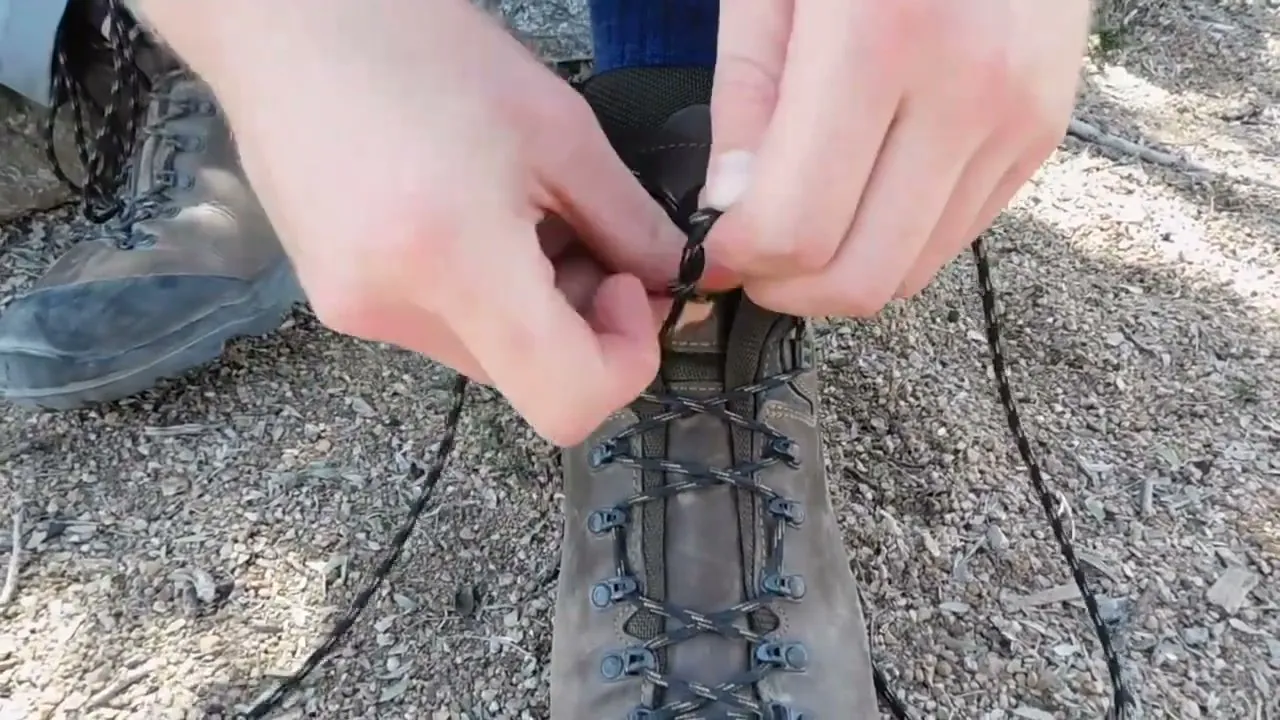
Step 2: the double twist in the laces, just where the foot meets the ankle, from Down to Earth Trekking's video.
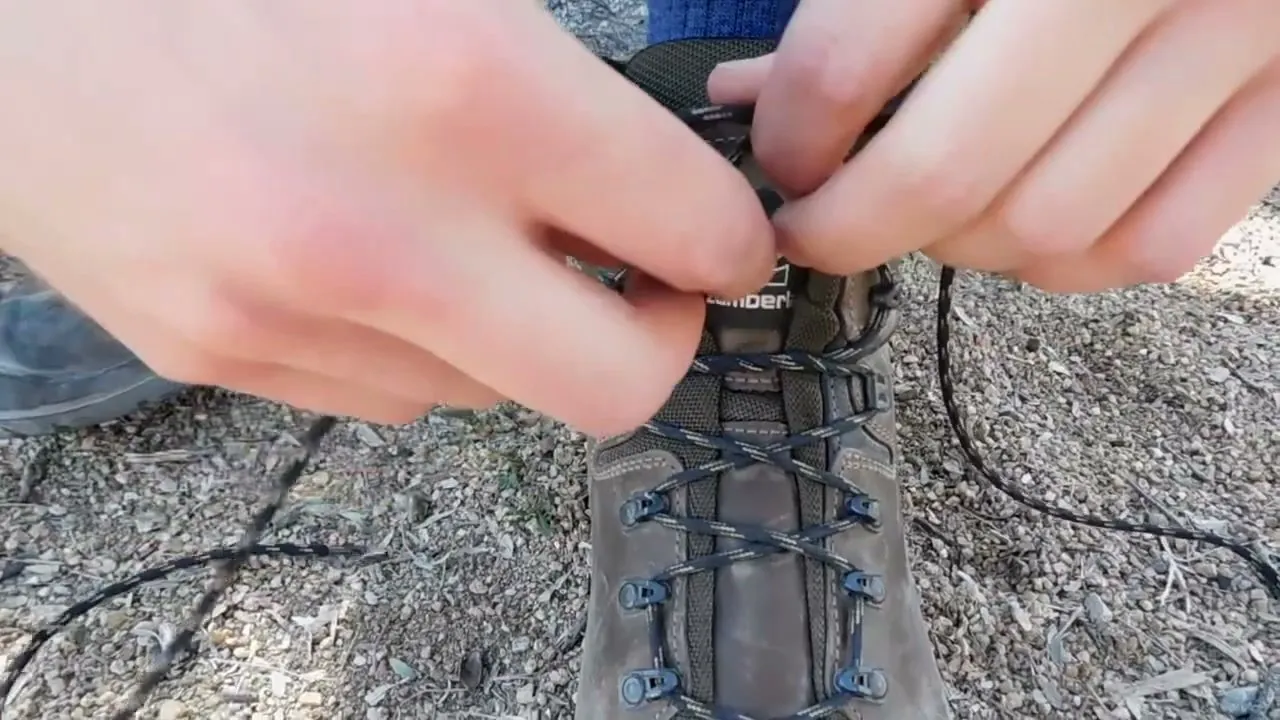
Step 3: pinching the laces where they cross at the top eyelets, from Down to Earth Trekking's video.
What about powders, petroleum jelly and antiperspirant?
The medical body and the research review disagree a little here, so I show both. The AAD lists powder or petroleum jelly on areas that rub as a way to cut friction. The 2024 review says powders either don't work or raise the risk of blisters, and that no studies of lubricants on feet exist. In lab tests on skin, thick lubricants cut friction for only about 90 minutes, and by 3 hours friction was back above where it started.
So petroleum jelly may help for a while and needs reapplying, but nobody has proven that on feet. The review also concludes that antiperspirants that don't irritate the skin do not prevent blisters.
What do I do the moment a hot spot starts?
Basically, the earlier you act, the better. The AAD says to stop early. Stop the activity right away if you feel pain or discomfort, or if your skin turns red. Then follow these steps.
- Stop and take off your shoe and sock. Look at the spot.
- Find the cause. A wet sock, a bunched-up sock or a loose heel are the usual reasons that hiking channels name. That is reported practice, not medical advice.
- Dry your foot and the sock, or change into dry socks. The NHS says to change your socks if your feet sweat.
- Cover the spot. The AAD lists moleskin, a soft padded adhesive fabric, or another soft bandage applied securely. Tape or a blister cushion are other options hikers use, and I cover both below. The skin should be clean and dry first.
- Lace up again, and check the spot again at your next break.
If the skin has already opened, skip ahead to the section on treating a blister.
Does taping your heel prevent blisters?
Maybe, and the studies disagree. The 2024 review found tape results were equivocal, meaning unclear. An ultramarathon is a race longer than a marathon. In one ultramarathon study of 90 finishers, the tape didn't protect, and more taped feet got blisters than untaped feet (52% against 39%). In another study of 109 finishers, taped areas had far fewer blisters (8 against 74). Both studies used paper tape on runners, not Leukotape on hikers.
So I can't tell you that tape prevents blisters. Some hikers put rigid sports tape on a hot spot, and the Outside Chronicles video below shows how. That is reviewer opinion, not medical advice.
Here is what the Outside Chronicles presenter and a store listing say about Leukotape P:
- Buy the P version, not the K version. The presenter says Leukotape P is the non-stretchy kind, and that the stretchy K kind is different.
- Leukotape P contains natural rubber latex, according to the store listing in the gear table. Check the box, and skip the tape if you have a latex allergy.
- Put the tape on before the skin breaks. A hiking guide and forum posters say the adhesive can pull on broken skin. Use a dressing on an open blister instead. The presenter says he would put the tape over an existing blister, but he warns that you can pull skin off when you peel the tape away.
- Round the corners of each strip so the edges stay down, and press the strip on smooth.
How do I treat a heel blister on the trail?
The AAD and the NHS agree on the main point. Leave the blister alone if you can, and don't burst the blister yourself.
What do I do with a blister that is still whole?
- Leave the blister alone. The AAD says most whole blisters heal on their own in one to two weeks. The NHS says about a week.
- Clean the area gently and pat it dry. That is the NHS's step.
- Cover the blister loosely. The AAD says to use a bandage so the middle stays slightly raised. The NHS says a soft plaster or a padded dressing.
- Take pressure off the spot. The AAD says to cut padding into a donut shape, put the hole around the blister, and cover both with a bandage.
The NHS also says a hydrocolloid dressing can protect the blister, reduce pain and speed up healing. A hydrocolloid dressing is a soft gel-like pad that sticks to the skin and keeps a wound moist. Compeed is a well-known brand of hydrocolloid blister cushion, and I list two Compeed packs in the gear table below.
Should I pop a heel blister?
Mostly no. The AAD says popping or draining a blister can lead to infection. The NHS says not to burst a blister yourself. The AAD says to drain a blister only if the blister is large and very painful, and gives these steps:
- Sterilize a small needle with rubbing alcohol.
- Pierce one edge of the blister.
- Wash with soap and water afterward.
- Apply petroleum jelly.
- Leave the skin roof of the blister in place.
Never cut the skin roof off. If you aren't sure, see a doctor instead. And if a blister has already burst, the NHS says not to peel off the skin and not to pick at the edges.
What gear helps, and what does each item cost?
So you probably own some of this already. If you have padded wool or synthetic hiking socks, a bandage and plain petroleum jelly, you can start with those. Prices below were checked October 16, 2026. Prices change, so check the linked page before you buy.
| Item | What it does | Price, checked October 16, 2026 | Details | What the evidence says |
|---|---|---|---|---|
| Padded wool or synthetic hiking socks you already own | Wick away sweat, pad the heel and cut friction. | Already yours | Use padded wool or synthetic. Not cotton. | The AAD and NHS back wicking socks. The 2024 review found padded acrylic socks reduced blisters in two double-blind studies. |
| Darn Tough Hiker Micro Crew Midweight with Cushion socks (step-up) men's and women's | Padded wool hiking sock. | $26.00 for the men's and the women's on the maker's pages, in stock | Men's style 1466 is 61% merino wool, 36% nylon and 3% spandex, about 8.5 inches from heel to cuff. Women's style 1903 is 59% merino wool, 39% nylon and 2% spandex, about 7.5 inches from heel to cuff. The maker lists a lifetime guarantee. | No test of these socks against others, and none showing they prevent blisters. |
| Moleskin or a soft bandage you already own (store search for moleskin) | Covers a hot spot or pads around a blister. | Any brand | Cut padding into a donut shape for a blister on a pressure point. | The AAD lists moleskin and soft bandages. The AAD page doesn't cite studies of how well moleskin works. |
| Plain petroleum jelly (budget, any brand, store search for petroleum jelly) | Cuts friction, and goes on after draining a blister. | Any brand | The AAD names petroleum jelly. | The AAD lists petroleum jelly. The 2024 review says no studies on feet, and lab tests showed friction relief lasting about 90 minutes. |
| Leukotape P, 1.5 in x 15 yd roll | Rigid tape barrier over a hot spot. | $14.98 per roll at WellBefore, in stock | Non-stretchy. Make sure the box says P, not K. The store listing says Leukotape P contains dry natural rubber latex. | Studies of tape disagree (see above). Plenty of reviewer praise. Not for open blisters. |
| Compeed Advanced Blister Care, Medium, 10 count | Hydrocolloid cushion for a blister or heel hot spot. | $8.91, listed as temporarily unavailable on October 16, 2026 | 2.6 x 1.6 inches. The listing says to apply to clean, dry skin and leave on until the pad comes off. | The NHS names hydrocolloid dressings. Compeed's own speed and pain claims are marketing, so I don't repeat them. |
| Compeed Advanced Blister Care, mixed sizes, 10 count (step-up) | Same cushions in three sizes. | $9.99 at Playtri, in stock | The listing says 4 medium cushions for heels, 4 small cushions for the sides of the foot and 2 toe patches. | Same as the Compeed Medium row above. |
| Body Glide Foot Glide Anti Blister Stick | Friction stick for places that rub. | $8.99 for 0.80 oz, $5.49 for 0.35 oz | The maker says no petroleum, no parabens and no phthalates. | No study on feet. Plain petroleum jelly is the cheap option. |
Basically, I'd start with the socks and bandage you own. Then I'd add Leukotape P or a Compeed cushion if your heels have given you trouble, and skip the rest until you need it. That is my opinion, not medical advice.
Which videos show these steps?
A hiker named Jake shows four ways to lace a boot to relieve foot pain.
- Fit first: He opens by saying a boot that doesn't fit will still give hot spots and blisters, whatever the lacing.
- The four laces: The window lace relieves pressure on top of the foot. The toe relief lace gives the toes more room. The surgeon's knot uses a double twist to hold the foot back. The heel lock adds crossed loops near the ankle to hold the heel in place.
- Heel lock: This starts at about 3:50, and the steps above follow his.
- Worth knowing: These are his opinions and none of the lacings has been tested in a study. He says the surgeon's knot suits narrow feet and low arches.
A hiker named Mike shows how he cuts and stores Leukotape P for the trail.
- Which tape: He says to look for the P version, which doesn't stretch.
- Carrying it: He cuts small strips and sticks them on backing paper in his first aid kit. He says the adhesive dries out, so he replaces the strips about once a year.
- Using it: He rounds the corners, presses the strip on a hot spot, and says a patch can last about a week, even through showers.
- Worth knowing: This is one hiker's opinion, and the price he gives is from 2021. He says he would tape over an existing blister, but warns about pulling skin off. I'd use a dressing on an open blister instead.
A blister-care educator explains three kinds of blister and what each kind needs.
- Whole blister: The educator says to protect the skin roof with an island dressing. That is an absorbent pad with tape all around, and no tape touching the blister.
- Torn blister: The educator says to keep the loose skin in place, use an antiseptic, and watch for infection.
- Roof rubbed off: The educator says to keep the raw area moist with a dressing such as a hydrocolloid.
- Worth knowing: This is one educator's opinion. For treatment steps and when to see a doctor, use the AAD and NHS steps above.
What's next after this page?
Now once your heels are sorted, another body problem new hikers run into is sore knees on the way down. My guide to why your knees hurt going downhill, and how to fix it covers that. And if you want to lengthen your hikes without more foot trouble, my guide to building up from short hikes to big elevation days is the place to go.
My take
So ultimately, stopping heel blisters comes down to shoes that fit and padded wool or synthetic socks. And break your shoes in before the big hike, and cover the first hot spot right away.
But for me personally, the honest part matters just as much. Few blister products are proven, and the tape studies disagree. Heel-lock lacing and fit tips are common technique, not proven fixes.
And if a blister looks infected, or you have diabetes and get any blister on your foot, see a doctor instead of treating the blister on the trail.
Have a question about “How to stop getting blisters on your heels when hiking”?
Ask it here. Every question comes to me first. I answer as many as I can, and each answered question goes on this page with my answer so other hikers and climbers can see it too. I don't ask for your email, so check back on this page for the answer.
More health and safety guides
Altitude sickness: how to avoid it, the warning signs, and when to go down
A plain guide for Kilimanjaro, Everest Base Camp and any trek that sleeps above 2,500 m (8,200 ft).
Why your knees hurt going downhill, and how to fix it
A plain guide for hikers whose knees ache on the way down, with what medical sources say and when to see a doctor.
- Rushton R, Richie D. Friction Blisters of the Feet: A Critical Assessment of Current Prevention Strategies. Journal of Athletic Training, 2024, 59(1):8-21, checked October 16, 2026: how blisters form, socks, tape, lubricants, powders, antiperspirants, break-in numbers.
- Lipman GS and others, Pre-TAPED, Wilderness and Environmental Medicine, 2014, and Pre-TAPED II, Clinical Journal of Sport Medicine, 2016, checked October 16, 2026: the two paper tape studies in ultramarathon runners.
- American Academy of Dermatology, How to prevent and treat blisters, checked October 16, 2026: fit, socks, stopping early, moleskin, treating and draining a blister, when to see a doctor.
- NHS, Blisters (last reviewed November 22, 2023, next review due November 22, 2026), checked October 16, 2026: prevention, hydrocolloid dressings, when to get medical advice.
- CDC, Diabetes and your feet, checked October 16, 2026: seeing a doctor right away for a blister or sore if you have diabetes.
- Darn Tough maker pages, checked October 16, 2026: men's Hiker Micro Crew Midweight and women's Hiker Micro Crew Midweight: price, fabric mix and length.
- Store listings, checked October 16, 2026: Leukotape P at WellBefore, Compeed Medium at Vitacost, Compeed mixed sizes at Playtri, and Body Glide Foot Glide.
- Videos, checked October 16, 2026: Down to Earth Trekking, Outside Chronicles and Blister Prevention. These are opinion, not medical sources.
Everest Buddy is an independent site. No gear maker, store or guide company paid to be on this page. This guide gives general information, not medical advice, so see a doctor before you start a new training plan or travel to high altitude.